
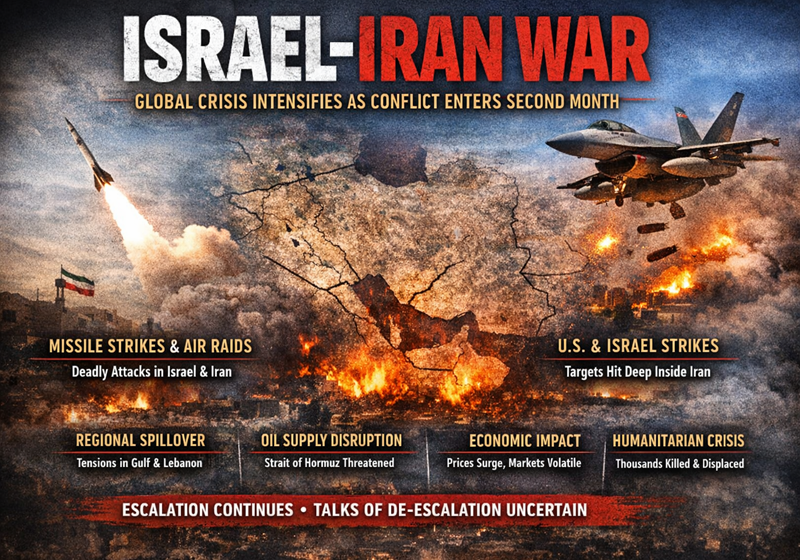
The ongoing conflict between Israel and Iran has intensified sharply, entering its second month with sustained missile attacks, airstrikes, and growing global concern over its far-reaching consequences. What began as a regional confrontation has now evolved into a multi-front crisis impacting international security, energy markets, and diplomatic relations.
Escalation on the Battlefield
Since the outbreak of hostilities on February 28, 2026, both sides have engaged in continuous military operations. Iran has launched waves of ballistic missiles and drones targeting Israeli cities and strategic installations, causing civilian casualties and infrastructure damage.
In response, Israel has conducted extensive airstrikes deep inside Iranian territory, focusing on military bases, weapons facilities, and high-ranking officials. Israeli defense sources claim that thousands of targets have been neutralized in recent operations, signaling a significant escalation in offensive capabilities.The United States, backing Israel, has also carried out precision strikes on key Iranian underground sites, further intensifying the conflict and drawing international scrutiny.
Regional Spillover
The war is no longer confined to Israel and Iran. Tensions have spilled into neighboring regions, with reported incidents in Lebanon and parts of the Gulf, including Qatar and surrounding strategic waters.
One of the most critical flashpoints remains the Strait of Hormuz—a vital global oil transit route. Disruptions in this area have raised alarms across the international community, as any prolonged blockage could severely impact global energy supplies.
Global Economic Impact
The conflict has triggered volatility in global oil markets, with prices surging amid fears of supply disruption before showing slight corrections on hopes of diplomatic intervention. Analysts warn that continued instability could lead to one of the most significant energy shocks in recent history.
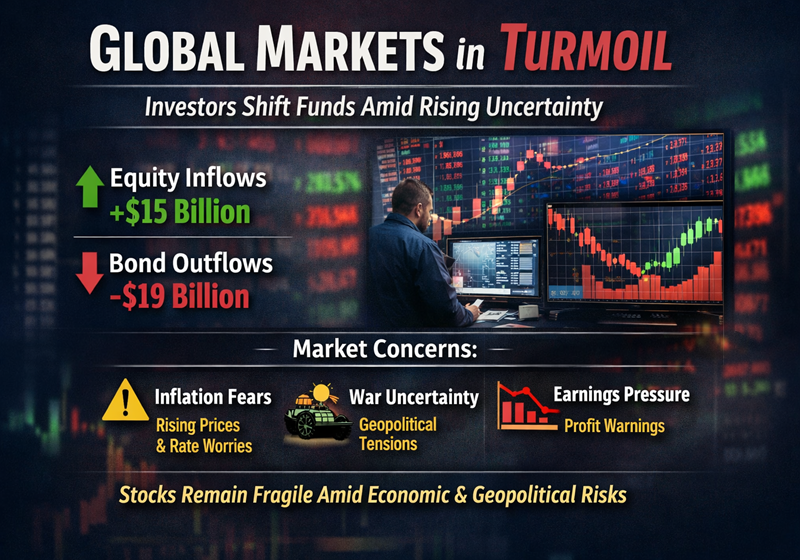
Supply chain disruptions and rising fuel costs are already affecting economies worldwide, increasing inflationary pressures and creating uncertainty in financial markets.
Diplomatic Developments
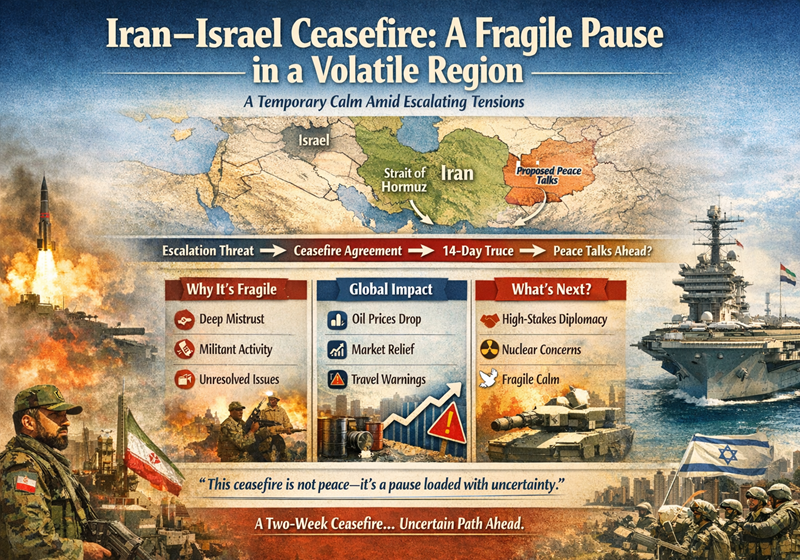
Despite the ongoing violence, there are early signs of potential diplomatic engagement. U.S. officials have indicated that there may be a “possible pathway” to de-escalation in the coming weeks, though no formal negotiations have been confirmed.
Iran has maintained a firm stance, continuing its retaliatory actions while issuing warnings to Western interests. Meanwhile, European nations have largely refrained from direct involvement, instead calling for immediate de-escalation and renewed dialogue.
Humanitarian Concerns
The human cost of the conflict continues to rise, with thousands reported killed or injured, including civilians on both sides. Infrastructure damage and displacement are creating mounting humanitarian challenges, further complicating relief efforts in affected areas.
The Road Ahead
As the Israel–Iran conflict intensifies, the risk of a broader regional war remains high. While diplomatic signals offer a glimmer of hope, ongoing military operations suggest that a resolution may still be distant.
The coming weeks will be critical in determining whether global powers can steer the situation toward de-escalation—or whether the conflict will deepen, with even more severe consequences for the region and the world.







_1787311384692389503.jpeg)






_1778829499287382204.png)











_1741851351227282101.png)